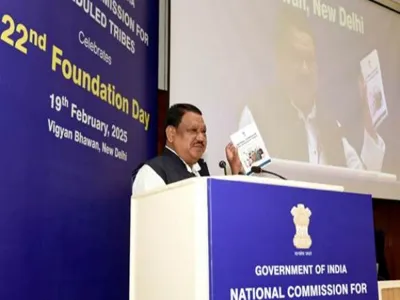
| Why in the news? | Celebrating 22 Years of Empowerment: National Commission for Scheduled Tribes |
| Union Minister's Address | Shri Jual Oram emphasized the NCST's role in implementing the Forest Rights Act and other initiatives for tribal welfare |
| Chairperson's Address | Shri Antar Singh Arya outlined NCST's achievements, including the 100-day action plan to monitor tribal welfare progress |
| Key Government Initiatives for Tribes | Eklavya Model Residential Schools, scholarships (pre/post-matric), National Overseas Scholarship |
| PVTG Identification | 75 Particularly Vulnerable Tribal Groups (PVTGs) identified for specialized development plans |
| Key Speakers & Dignitaries | Shri Hansraj Gangaram Ahir (NCBC), Shri Vaddepally Ramchander (NCSC), and other tribal community leaders |
| Development Focus Areas | Skill development, entrepreneurship, and community progress through collaboration with experts and academics |
| NCST's Role in Safeguarding Rights | Investigating constitutional safeguards, addressing rights violations, and advising on socio-economic development plans |
| Aspect | National Commission for Scheduled Tribes (NCST)/Details |
| Nature | Constitutional body for safeguarding the rights and welfare of Scheduled Tribes (STs) |
| Headquarters | New Delhi |
| Constitutional Basis | Article 338-A of the Indian Constitution |
| Scheduled Tribes (STs) | Communities notified under Article 342 of the Constitution, primarily located in forest and hilly regions |
| Evolution | - 65th Amendment Act (1990): Established NCST and NCSC. - 89th Amendment Act (2003): NCST was bifurcated from SC/ST Commission. |
| Composition | Chairperson, Vice-Chairperson, and 3 members appointed by the President |
| Tenure | 3 years for Chairperson and members (max 2 terms) |
| Main Functions | - Investigate constitutional safeguards for STs - Monitor and address rights violations - Advise on socio-economic development of STs - Submit reports to the President, Parliament, and State Governments |