
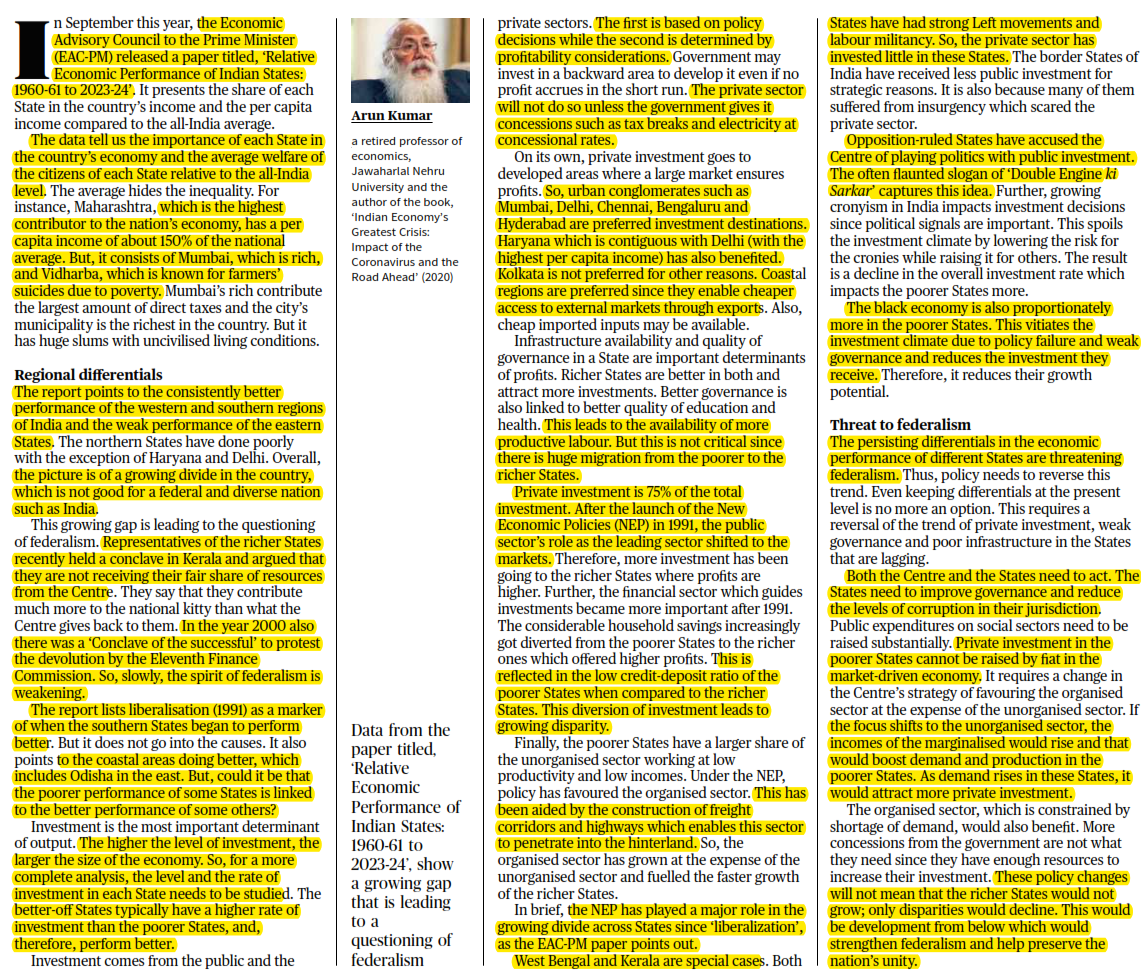
A picture of a growing economic divide in India
- The Economic Advisory Council to the Prime Minister's (EAC-PM) paper on the economic performance of Indian states highlights several crucial issues regarding regional disparities in economic growth and development. Here are some key points and implications derived from the report:
Key Findings:
Regional Economic Disparities:
- The report indicates a widening economic divide among Indian states, with western and southern states performing better while eastern and some northern states lag behind.
- Maharashtra stands out as the highest contributor to the national economy, yet the stark contrast between affluent areas like Mumbai and impoverished regions like Vidarbha illustrates the inequality present even within prosperous states.
Impact of Liberalization:
- The liberalization policies initiated in 1991 have benefited certain states more than others, particularly those with robust investment climates, infrastructure, and governance.
- Investment trends show a preference for wealthier states, as private sector investment tends to flow to regions with established markets and higher profitability.
Investment as a Key Driver:
- Investment, both public and private, is crucial for economic growth. States that attract higher levels of investment tend to perform better economically.
- The public sector can stimulate growth in underdeveloped areas, but private investment usually gravitates towards developed regions unless incentivized by government policies.
Governance and Infrastructure:
- Effective governance and quality infrastructure are significant factors that attract investment. Poor governance in lagging states contributes to their inability to attract private sector investment.
- The role of the unorganised sector is more pronounced in poorer states, where productivity and incomes are generally low, affecting overall economic performance.
Historical and Political Context:
- States like West Bengal and Kerala, which have experienced strong leftist movements, have seen less private sector investment due to labor militancy.
- Border states and those with security challenges, like insurgency, also receive less public investment, impacting their development.
Implications for Federalism:
- The growing economic divide raises concerns about the stability and spirit of federalism in India. Wealthier states are increasingly vocal about the distribution of resources, arguing that they contribute more to the national economy than they receive in return.
- The current trajectory could lead to a deterioration of cooperative federalism, where states collaborate for mutual benefits, potentially fostering resentment among less prosperous states.
Recommendations for Policy Change:
- Improving Governance:
- States must focus on enhancing governance and reducing corruption to create a favorable investment climate.
- Targeting the Unorganised Sector:
- Shifting focus from the organized to the unorganised sector could help improve incomes for marginalized populations, thereby boosting demand and attracting investment.
- Public Expenditure on Social Sectors:
- Increased public spending in health, education, and infrastructure in poorer states is essential for long-term growth and development.
- Revising Investment Strategies:
- The central government should consider strategies that promote balanced regional development rather than favoring already prosperous states.
- Strengthening Federalism:
- Policies aimed at reducing disparities will not only enhance economic growth but also strengthen the foundations of federalism, contributing to national unity.
Conclusion:
- Addressing the economic disparities between states in India requires a multifaceted approach that includes improving governance, revising investment strategies, and focusing on the unorganised sector. By fostering equitable growth, India can reinforce its federal structure, ensuring that all states can contribute to and benefit from the nation's overall development.