
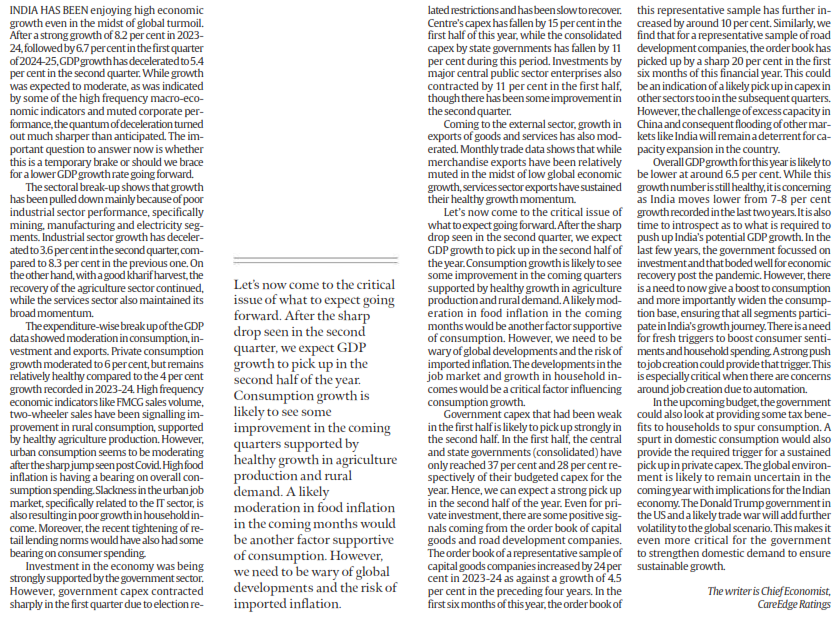
A push for growth
- India’s economic trajectory continues to capture global attention, maintaining strong growth despite global economic uncertainties. However, recent data signals a slowdown, with GDP growth decelerating from 8.2% in 2023-24 to 5.4% in the second quarter of 2024-25. This dip raises important questions about the sustainability of India's growth and the policy directions needed to invigorate the economy.
Recent Trends: A Closer Look at Sectoral and Expenditure Patterns
- Sectoral Dynamics:
- Industrial Sector Slump: The industrial sector saw a sharp deceleration, with growth dropping to 3.6% in Q2 from 8.3% in Q1. Mining, manufacturing, and electricity were the primary laggards.
- Agriculture and Services Resilience:
- A strong kharif harvest bolstered agricultural growth.
- The services sector maintained momentum, contributing significantly to overall GDP.
- Expenditure Components
- Consumption:
- Private consumption moderated to 6%, influenced by high food inflation and slackness in urban job markets, particularly in the IT sector.
- Rural consumption showed signs of recovery, aided by robust agricultural output and improving FMCG sales.
- Investment:
- Government capital expenditure (capex) fell sharply in the first half, with the central government’s capex down by 15% and states’ by 11%.
- Private investment showed positive signals, with a healthy uptick in capital goods and infrastructure order books.
- Exports:
- While merchandise exports remained subdued due to weak global growth, services exports sustained robust performance.
Challenges and Opportunities
- Inflation and Household Incomes:
- High food inflation has constrained consumption, but a likely moderation in food prices could revive spending.
- Urban job market stagnation, coupled with tightening lending norms, continues to weigh on household incomes.
- Government Spending:
- The slow pace of government capex in the first half presents a challenge. However, with only 37% (central) and 28% (states) of the budgeted capex utilized so far, there is substantial room for growth in the second half.
- Global and Domestic Risks:
- External Risks: The global economic environment remains uncertain, compounded by geopolitical tensions and potential trade wars.
- Domestic Risks: Rising automation and concerns over job creation could dampen household spending and consumption.
Policy Recommendations for Sustained Growth
- Strengthening Domestic Consumption:
- Tax Benefits: Providing tax relief to households could spur consumption, thereby driving private investment.
- Expanding Consumption Base: Policies should focus on inclusive growth, ensuring participation from all economic strata.
- Boosting Employment:
- Job Creation Initiatives: Automation challenges necessitate robust job creation programs, particularly in manufacturing and services.
- Skill Development: Upskilling the workforce to meet the demands of evolving industries is critical.
- Reviving Investments:
- Accelerating Capex: Governments at all levels should expedite infrastructure spending to stimulate economic activity.
- Private Investment: Incentivizing private sector investment through policy stability and targeted interventions could further strengthen capex trends.
- Mitigating External Vulnerabilities:
- Trade Diversification: Reducing dependence on specific markets and focusing on emerging economies could mitigate risks from global trade tensions.
- Import Substitution: Policies to enhance domestic manufacturing and reduce reliance on Chinese imports would protect against external shocks.
Outlook for the Future:
- India’s GDP growth for 2024-25 is projected to moderate to around 6.5%, a healthy rate but lower than the 7-8% levels seen in recent years. The upcoming budget presents a critical opportunity to address structural challenges and set the stage for a sustainable growth trajectory. Key areas of focus should include boosting domestic demand, fostering job creation, and strengthening public investments.