| Report Title | "Blue Carbon and its Role in Carbon Sequestration" (2024) |
| Key Finding | Mangroves can store 1,000+ tons of carbon per hectare, making them highly effective carbon sinks. |
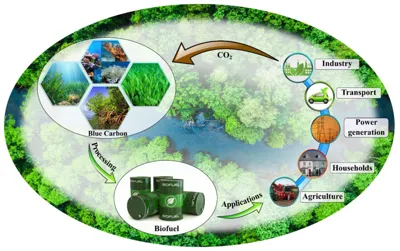
| Definition of Blue Carbon | Carbon captured and stored by ocean and coastal ecosystems (mangroves, seagrass meadows, salt marshes, tidal swamps). |
| Role of Blue Carbon Ecosystems | - Sequester CO₂ at higher rates than terrestrial forests. - Provide coastal protection, biodiversity conservation, and livelihood support. |
| Mangroves' Carbon Storage | - Store carbon above and below ground, with significant amounts in soil sediments. |
| Ecological & Economic Benefits | - Carbon Sequestration: Reduces atmospheric CO₂. - Coastal Protection: Shields against storms and sea-level rise. - Biodiversity Support: Habitat for marine and terrestrial species. - Livelihood Support: Provides resources like fish, timber, and honey. |
| Threats to Blue Carbon Ecosystems | - Aquaculture & Agriculture: Conversion of mangroves for farming. - Mangrove Deforestation: Unsustainable logging. - Pollution & Industrial Development: Coastal degradation. |
| Global Impact of Degradation | - Loss of blue carbon ecosystems releases stored carbon, worsening climate change. - Leads to coastal erosion and biodiversity loss. |
| Economic Benefits of Restoration | - Ecotourism Growth: Boosts local economies. - Global Economic Gains: OECD (2024) reports $1 invested in blue carbon restoration yields $6 in benefits. - WEF (2023): Coastal GDP could increase by 15% through integrated restoration. |
| Government Initiatives | MISHTI (Mangrove Initiative for Shoreline Habitats & Tangible Incomes) - Target: Restore 540 km of mangroves across countries. - By December 2024: 250 km² of mangroves to be restored. Coastal Regulation Zone (CRZ) Policy - Regulates coastal development to protect ecosystems. |
| Key Provisions of CRZ Policy | - CRZ Areas: Coastal land up to 500 meters from High Tide Line (HTL). - Zoning System: Divides CRZ into four categories (I-IV) based on ecological sensitivity and development level. - Prohibited Activities: Industrial expansion, hazardous waste disposal, untreated sewage discharge. - Permissible Activities: Infrastructure projects, traditional fishing, conservation programs. |