
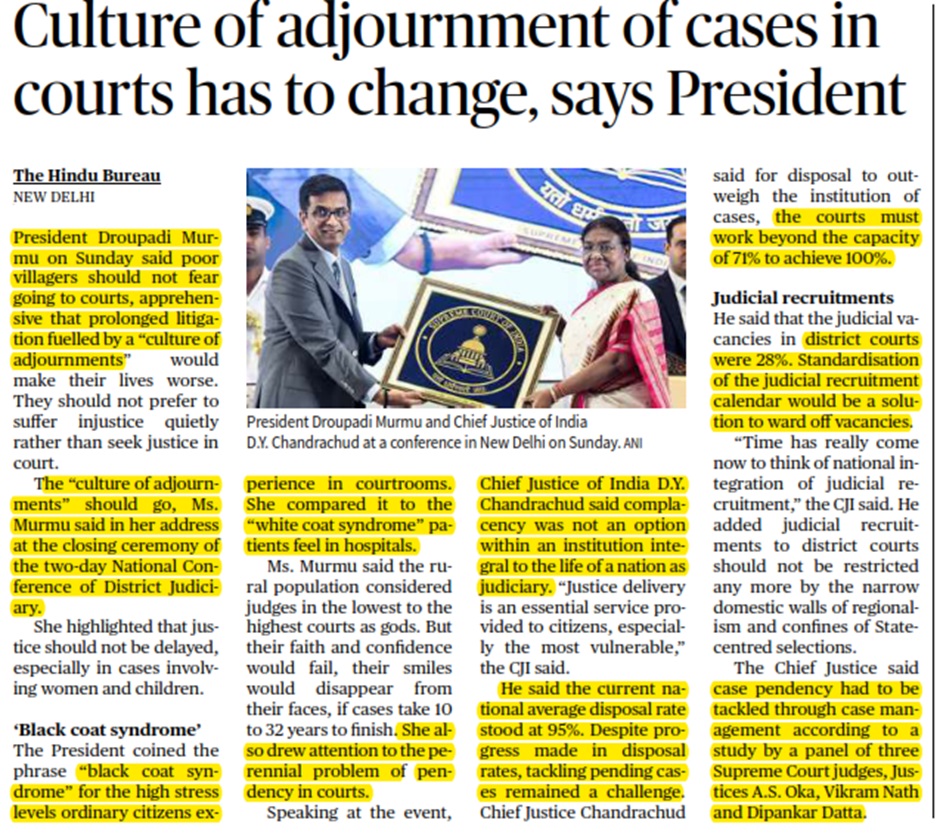
Culture of adjournment of cases in courts has to change, says President
- Time has really come now to think of national integration of judicial recruitment, says CJI
Highlights:
- During her address at the closing ceremony of the National Conference of District Judiciary, the President of India highlighted the need to end the “Culture of adjournment” to ensure effective and equal delivery of justice to all.
Concerns Raised:
- Fear of Litigation: President Murmu addressed the issue of poor villagers fearing the judicial process due to prolonged litigation and a prevalent "culture of adjournments."
- Impact on Justice: Emphasized the detrimental effects on those seeking justice, particularly how delays discourage the rural population from pursuing legal remedies.
- "Black Coat Syndrome": Coined to describe the anxiety and stress faced by ordinary citizens in courtrooms, akin to "white coat syndrome" in medical settings.
- Public Trust in Judiciary: Highlighted the erosion of public trust when judicial processes extend over decades (10 to 32 years), affecting the rural populace's perception of the judiciary.
Remarks by Chief Justice D.Y. Chandrachud
- Judicial Performance: Acknowledged a national average disposal rate of 95% but noted the challenge remains significant with a need to boost court efficiency beyond the current capacity of 71% to handle cases.
- Judicial Recruitment Issues: Pointed out a 28% vacancy rate in district courts, proposing the standardization of the judicial recruitment calendar and advocating for a national approach to judicial recruitment to overcome regional biases.
Proposed Solutions
- Eliminating Adjournments: Suggested a cultural shift within the judiciary to mitigate unnecessary adjournments and speed up the justice delivery process.
- Enhanced Case Management: A study by Supreme Court justices A.S. Oka, Vikram Nath, and Dipankar Datta, suggests improvements in case management as a method to address case pendency effectively.
Conclusion
- Call for Judicial Reform: Both leaders underscored the need for systemic changes to enhance the efficiency of the judiciary, ensure timely justice delivery, and restore public confidence in the legal system, particularly for vulnerable groups such as women and children.
Prelims Takeaway:
- Judicial Reforms