
Does H5N1 pose a threat for humans?
- The highly pathogenic avian influenza (HPAI) H5N1 strain has been affecting cattle across several States in the U.S., and for the first time, three cases of human infection in dairy farm workers were also reported.
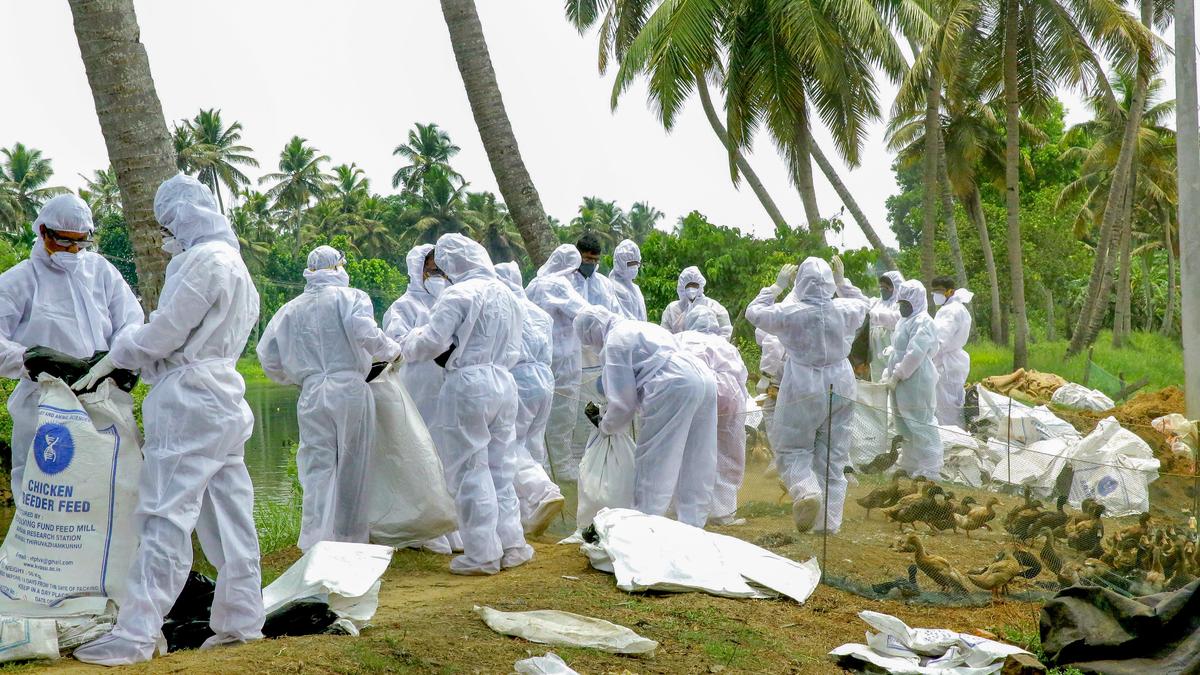
- The districts of Alappuzha, Kottayam and Pathanamthitta in Kerala, where water bodies, migratory birds, fowls and integrated farms form part of the ecosystem, have reported H5N1 outbreaks in 19 places since April.
- However, the death of crows in large numbers in Alappuzha, and subsequent confirmation of the H5N1 virus in their carcasses have given rise to concerns that the virus could spread far and wide.
How dangerous is H5N1?
- Ever since it emerged in 1996, H5N1 has resulted in the mass killing of billions of wild birds as well as fowls.
- The virus’s jump to some 26 mammalian species, especially cattle and the now emerging proof that it can infect humans, has heightened the threat perception that H5N1 could lead to the next global pandemic.
- Of particular concern are the facts that herd-to-herd transmission of H5N1 is now taking place in the U.S.
Risk to humans
- According to scientists, the virus lacks changes that would make it better adapted to transmit between people and therefore, the risk to human health remains low.
- However, the potential for influenza viruses to rapidly evolve and the wide geographic spread of H5N1 signals that more human infections should be expected.
- The virus seems to spread from birds/animals to humans who may be closely interacting with these, without adequate personal protection.
- According to the WHO, between 2003 and April 1, 2024, close to 900 human infections of H5N1 have been reported from 23 countries, of which, more than half were fatal.
- Even though the risk of human infections from H5N1 is still perceived to be low, this can change rapidly as the virus spreads to more animals, especially cows or domestic mice, which have closer contact with humans.
Symptoms of H5N1
- The common symptoms of H5N1 are similar to those of influenza-A illnesses, including respiratory difficulties, fever, cough, sore throat and pneumonia, all of which can potentially worsen, especially in those who are immunocompromised or have underlying conditions.
- In the U.S., conjuctivitis or pink eye was the only symptom that was reported in one of the farm workers who was infected.
Precautions
- People should avoid unprotected exposure to infected birds or animals or their contaminated environments.
- If at all one has been exposed to a possible H5N1-contaminated environment, they should monitor themselves for new respiratory illness symptoms, including conjunctivitis for 10 days and seek proper medical advice.
- It would be better to ensure that people use only pasteurised milk and poultry meat and eggs should be well-cooked to prevent any possible food-borne transmission of H5N1.
- People who have livestock and birds at home are being advised to wear masks, and the antiviral Tamiflu is being prescribed as prophylaxis to people wherever H5N1 positive cases are found.
Suggestive measures
- Continuous surveillance by testing environmental samples water, faecal matter of birds as well as Influenza-like illness human samples would be necessary in designated surveillance zones.
- One Health concept must be prioritized and operationalised.
PRELIMS TAKEAWAY
- BIRD FLU