
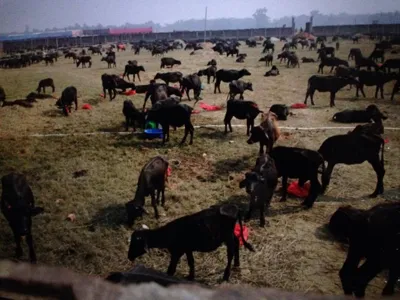
The Gadhimai Festival: Tradition, Controversy, and Animal Sacrifice
| Summary/Static | Details |
|---|---|
| Why in the news? | The Gadhimai Festival is controversial due to its mass animal sacrifices and ongoing debates on tradition and animal rights. |
| Location | Bariyarpur, Bara District, southeastern Nepal, near the India-Nepal border. |
| Frequency | Every five years (quinquennial). |
| Historical Roots | Founded by Bhagwan Chowdhary, who believed the goddess Gadhimai promised prosperity in exchange for blood sacrifice. |
| Animal Sacrifice | Mass slaughter of animals, including rats, pigeons, goats, and water buffaloes. |
| Scale | - 2009: Estimated 500,000 animals sacrificed. - 2014 and 2019: Approximately 250,000 animals sacrificed. |
| Animal Welfare Concerns | Critics argue the festival is cruel and inhumane, with calls for its cessation from global organizations like HSI. |
| Government Actions | - India (2014): Supreme Court orders restrictions on animal transport. - Nepal (2016): Supreme Court orders phase-out of animal sacrifices, largely ignored. |
| Attempts to End Sacrifice | Petitioning by activists and legal actions to stop or limit animal sacrifices. |
| Cultural Significance | Devotees view the festival as a key religious tradition to gain blessings from Gadhimai. |
| Opposition | Animal rights groups and international figures, including Brigitte Bardot, condemn the festival's brutality. |