
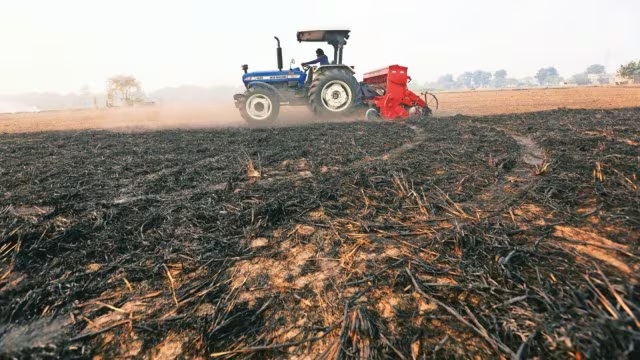
Govt prepares plan for climate-resilient farming
- The Union government is set to introduce a comprehensive framework aimed at promoting climate-resilient agriculture across 50,000 villages situated in climatically vulnerable districts. This initiative falls under a national programme for climate-resilient agriculture, which the Ministry of Agriculture and Farmers’ Welfare is poised to launch as part of its 100-day agenda. The Union Cabinet is expected to approve a proposal for this programme soon, according to a reliable source.
Major Impacts of Climate Change on Indian Agriculture:
- Changes in Rainfall Patterns:
- Climate change has caused significant alterations in rainfall patterns, affecting the timing, intensity, and distribution of rainfall.
- These changes can lead to droughts, floods, and erratic rainfall, all of which negatively impact agricultural productivity.
- For instance, the delayed and deficient monsoon rains in 2019 resulted in reduced crop yields across many regions in India.
- Increased Temperature:
- Rising temperatures adversely affect crop growth and development.
- High temperatures during the growing season can lead to decreased crop yields and lower the nutritional value of crops. Additionally, heat stress can harm livestock health and productivity.
- Recent heatwaves in India have particularly impacted heat-sensitive crops like wheat and rice, reducing their yields.
- Shifting Pest and Disease Patterns:
- Climate change alters the distribution and abundance of pests and diseases, complicating agricultural pest management.
- Changes in temperature and rainfall patterns can favor the spread of certain pests and diseases, negatively impacting crop health.
- For example, the increased incidence of pests like the pink bollworm has harmed cotton production in India, and locust swarms from the Somalia region due to erratic rain have also posed significant challenges.
- Water Scarcity:
- Climate change affects water availability, particularly in regions reliant on rainfall or snowmelt for irrigation.
- Altered precipitation patterns and melting glaciers can result in water scarcity, especially during crucial crop growth stages, reducing agricultural productivity and increasing competition for water resources.
- Changes in Cropping Patterns:
- Climate change influences the suitability of various crops in different regions, necessitating adjustments in cropping patterns to maintain productivity.
- Some crops may become less viable, while others may become more suitable. For instance, on an all-India basis, climate change is projected to boost coconut production.
- Increased Extreme Weather Events:
- Climate change has been linked to a rise in extreme weather events such as cyclones, storms, and hailstorms, causing significant damage to crops, livestock, and infrastructure, leading to yield losses and economic hardships for farmers.
- A recent example is Cyclone Biporjoy.
Way Forward:
- From Input-Intensive to Knowledge-Intensive Agriculture:
- India’s diverse farming practices necessitate the engagement of diverse viewpoints in a national dialogue to identify suitable solutions for the future.
- The advanced world is moving towards precision farming using sensors and scientific tools for exact practices and input application.
- Adopting high-tech, precise farming practices in India can reduce average costs, increase farmers' incomes, and address many challenges related to scale.
- Intercropping and Agroforestry:
- Growing different crops together in the same field or integrating trees with crops can enhance biodiversity, reduce soil erosion, and increase climate resilience.
- Intercropping legumes with cereals not only provides additional income but also improves soil fertility through nitrogen fixation.
- Promoting the cultivation of non-traditional crops that are more resilient to climate extremes can reduce dependency on a single crop and mitigate risks. For instance, promoting drought-tolerant millets can help farmers adapt to changing climatic conditions.
Intercropping and Agroforestry:
- Growing different crops together in the same field or integrating trees with crops can enhance biodiversity, reduce soil erosion, and increase climate resilience.
- Intercropping legumes with cereals not only provides additional income but also improves soil fertility through nitrogen fixation.
- Promoting the cultivation of non-traditional crops that are more resilient to climate extremes can reduce dependency on a single crop and mitigate risks. For instance, promoting drought-tolerant millets can help farmers adapt to changing climatic conditions.
Prelims Takeaway
- Agriculture related schemes and techniques in news