
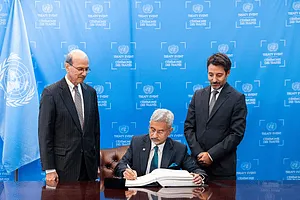
India Signs the High Seas Treaty: A Step Towards Marine Biodiversity Conservation
| Aspect | Details |
|---|---|
| Event | India signs the Biodiversity Beyond National Jurisdiction (BBNJ) Agreement (High Seas Treaty). |
| Signed by | External Affairs Minister S. Jaishankar. |
| Purpose of Treaty | Conservation of marine genetic resources and fair sharing of benefits. |
| Framework | Established under the United Nations Convention on the Law of the Sea (UNCLOS). |
| Scope | Targets high seas, covering 64% of the ocean. |
| Objectives | Long-term protection of marine biodiversity, sustainable use of marine resources, and fair benefit sharing. |
| Key Principles | Inclusive, integrated, ecosystem-centric approach; precautionary principle. |
| Provisions | Area-based management tools, environmental impact assessments, use of traditional and scientific knowledge. |
| Negotiations | Concluded in March 2023 after five years of discussions. |
| Implementation | Requires ratification by at least 60 countries to come into effect. |
| Institutional Mechanism | Plans to establish a dedicated authority by PK Srivastava, advisor to the Union Earth Sciences Ministry. |
| Legal Framework | Utilizes existing legislation like the Environment Protection Act for assessments. |
| Global Significance | First cohesive international legally binding framework for high seas biodiversity protection. |