
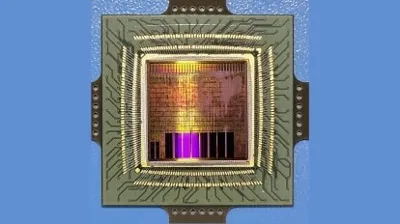
ISRO and IIT Madras Develop Indigenous Semiconductor Chip 'IRIS'
| Topic | Details |
|---|---|
| Why in News? | ISRO & IIT Madras developed and booted 'IRIS' (Indigenous RISC-V Microprocessor for Space Applications), a semiconductor chip based on the open-source RISC-V architecture, derived from the SHAKTI microprocessor project. This aims to reduce reliance on foreign chips for space missions. |
| Developed by | ISRO & IIT Madras |
| Chip Name | IRIS (Indigenous RISC-V Microprocessor for Space Applications) |
| Architecture | RISC-V (Open-source) |
| Derived From | SHAKTI Microprocessor Project |
| Purpose | Space applications, reducing dependence on foreign technology |
| Relevance | Boosts India's self-reliance in semiconductor technology under 'Atmanirbhar Bharat' |
| About ISRO | Headquarters: Bengaluru, Karnataka; Chairman: S. Somanath; Founded: 1969 |
| About IIT Madras | Established: 1959; Location: Chennai, Tamil Nadu |
| Development Process | - Concept proposed by ISRO Inertial Systems Unit (IISU) in Thiruvananthapuram- Collaboration with IIT Madras for design and specifications- Fabrication by Semiconductor Laboratory (SCL) in Chandigarh- Packaging by Tata Advanced Systems Ltd. in Karnataka- Motherboard manufactured by PCB Power in Gujarat |
| Future Prospects | ISRO plans to conduct flight tests using products based on the 'IRIS' controller to confirm its performance in real-world space mission scenarios. |