
Maintain balance between probes and ease of biz: CBIC to Customs
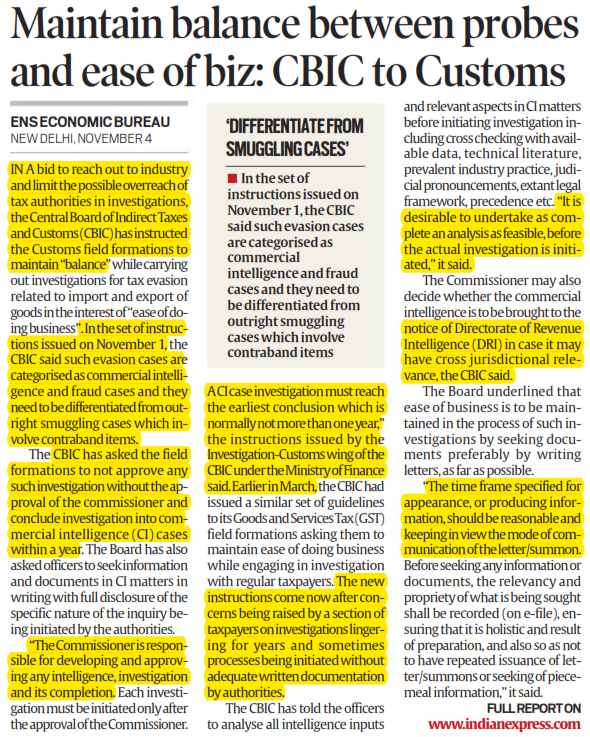
- In a bid to reach out to industry and limit the possible overreach of tax authorities in investigations, the Central Board of Indirect Taxes and Customs (CBIC) has instructed the Customs field formations to maintain “balance” while carrying out investigations for tax evasion related to import and export of goods.
Highlights:
- The Central Board of Indirect Taxes and Customs (CBIC) has issued new guidelines for Customs field formations to ensure balanced investigations in tax evasion cases related to imports and exports, aimed at enhancing ease of doing business and minimizing tax authority overreach.
Key Instructions from CBIC for Customs Field Formations
Differentiation of Cases:
- The CBIC categorizes evasion cases as commercial intelligence (CI) and fraud cases distinct from outright smuggling cases involving contraband.
- Emphasis is placed on balanced investigation in CI cases, with a streamlined process that avoids unnecessary intrusion.
Approval Process and Timeframe:
- Each investigation must receive approval from the Commissioner before initiation.
- CI investigations should be concluded within one year to prevent prolonged procedures.
Written Documentation:
- Information and documents related to CI cases must be requested in writing with a clear outline of the specific inquiry to avoid ambiguity.
Prioritizing Ease of Doing Business:
- The CBIC’s guidelines underscore the importance of timely and transparent investigation practices to prevent delays that could hinder businesses. Officers are advised to request documents by letters and to maintain reasonable deadlines for responses.
- Intelligence Analysis: Before initiating investigations, officers are instructed to thoroughly analyze available data, industry practices, judicial precedents, and other relevant information.
- Cross-Jurisdictional Coordination: The Commissioner may consult the Directorate of Revenue Intelligence (DRI) if cases have implications beyond the local jurisdiction.
Preventive Vigilance and Timely Closure of Investigations:
- Closing Investigations: The CBIC emphasizes that investigations should not remain pending unnecessarily, and should conclude even if no objectionable findings arise.
- Closure Reports: For cases where government dues are paid, the CBIC directs a timely closure report, including a brief summary of the issue and period involved. This aims to reduce any potential for malpractices and ensure a smooth conclusion for businesses involved.
Context and Background:
- Similar Guidelines for GST: Earlier in March, similar instructions were issued for GST investigations, highlighting the CBIC’s ongoing effort to improve business conditions and prevent overly aggressive investigations.
- Response to Taxpayer Concerns: The guidelines respond to taxpayer concerns about prolonged investigations and informal practices, advocating for better documentation and a well-defined process to foster business-friendly interactions.
Prelims Takeaways
- Central Board of Indirect Taxes and Customs (CBIC)
- Goods and Services Tax (GST)
- Directorate of Revenue Intelligence (DRI)