
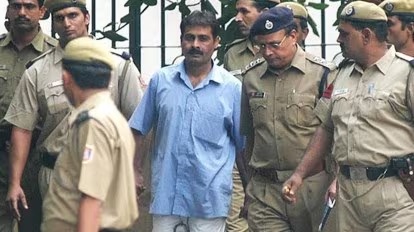
Red Fort case: What are the standards for awarding death sentence, the President’s ‘mercy’ power
- President has rejected a mercy petition filed by Pakistani national Mohammed Arif who was sentenced to death for the December 22, 2000 terrorist attack at the Red Fort in which three people including two Army jawans were killed.
India's President Holds Power to Grant Clemency
- The Indian Constitution grants the President the authority to show mercy to convicted criminals.
- This includes pardoning them entirely, reducing their sentences, or delaying their execution (Article 72).
- Governors have similar powers, but not for death sentences (Article 161).
- The President isn't completely independent in these decisions. Supreme Court rulings require them to consider advice from the Cabinet.
- The President can only ask the Cabinet to reconsider once if they disagree (Article 74).
- A new law, the Bharatiya Nagarik Suraksha Sanhita (BNSS), proposes to streamline the process for death row inmates seeking mercy from the President.
- This would eliminate appeals against the President's choices, making their decisions final.
- Courts wouldn't be able to review the reasons behind the President's mercy decisions either.
Death Penalty and Legal Considerations
- Capital punishment is legal in India, but the Supreme Court restricts it to "rarest of rare" cases (Bachan Singh v. State of Punjab, 1980).
- Courts have also asserted their right to review the President or Governor's mercy decisions (Epuru Sudhakar vs Andhra Pradesh, 2006).
- The right to life (Article 21) applies to death row inmates as well (Shatrughan Chauhan vs Union of India, 2014).
- Unreasonable delays in execution due to pending mercy petitions can lead the courts to intervene and change the sentence to life imprisonment.
Debate on the Death Penalty
- India's Law Commission has recommended abolishing the death penalty for most crimes, keeping it only for terrorism and war (262nd Report, 2015).
- This system offers a final chance for those facing death row to seek clemency from the President, but with limitations on the President's ultimate power.