
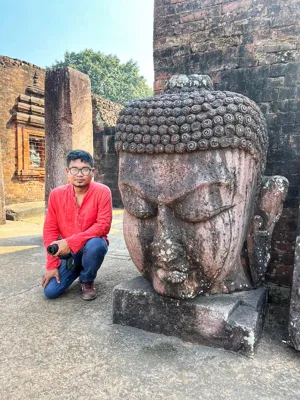
Rediscovering Ratnagiri: ASI's Excavation of Odisha's Buddhist Heritage
| Aspect | Details |
|---|---|
| Why in News? | Archaeological Survey of India (ASI) resumed excavations at Ratnagiri, Odisha, after 60 years. |
| Recent Discoveries | - Colossal Buddha Head (8th-9th century AD). |
| - Massive Palm Sculpture, likely part of a larger Buddha statue. | |
| - Ancient Wall and Inscribed Relics. | |
| Historical Context | Ashoka's Legacy: Embraced Buddhism after Kalinga war (261 BCE), promoting its spread. |
| Bhaumakara Dynasty: Fostered Buddhism in Odisha (8th-10th centuries). | |
| Geographical Significance | Located in Jajpur, Odisha, part of the "Diamond Triangle" with Udaygiri and Lalitgiri. |
| Situated on a hill between the Birupa and Brahmani rivers. | |
| Cultural Importance | Key center of Mahayana and Tantrayana Buddhism (5th-13th centuries). |
| Played a role in spreading Buddhism to Southeast Asia through trade and cultural links. | |
| Comparison with Nalanda | Ratnagiri rivaled Nalanda as a hub of Buddhist learning, especially for Vajrayana practices. |
| Previous Excavations | Conducted by Debala Mitra (1958-1961): Unearthed stupas, monastic complexes, and artifacts. |
| Current efforts by D B Garnayak: Focus on exploring hidden structures and ceramic assemblages. | |
| Government Initiatives | Promoting heritage tourism, restoring sites, and boosting global recognition of Buddhist legacy. |