| Festival Name | Sarhul Festival |
| Region | Chhotanagpur region, primarily Jharkhand |
| Date (2025) | 01st April, Tuesday |
| Significance | Marks the arrival of spring and the start of the new year for Adivasi communities |
| Deity | Sarna Maa, the village deity, believed to reside in the Sal tree |
| Cultural Importance | Symbolizes the harmonious union of the Sun and Earth, essential for life |
| Duration | Three days |
| Day 1 Activities | Cleaning homes and Sarna Sthals, gathering Sal flowers, priest observes a fast |
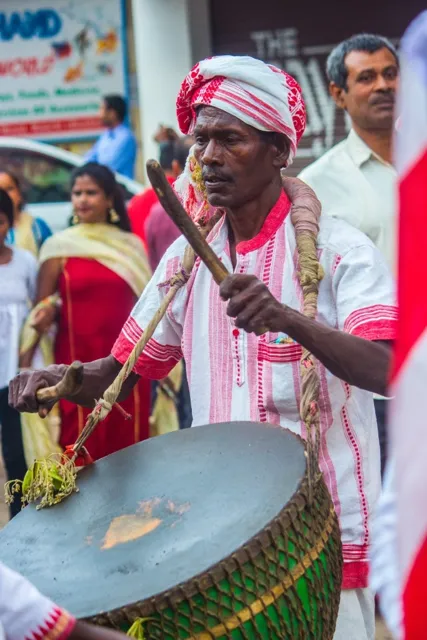
| Day 2 Activities | Main rituals at Sarna Sthals, sacrifices, prayers, cultural performances |
| Day 3 Activities | Community feast with traditional Adivasi food, Handia (rice beer), ceremonial fishing |
| Communities | PrimarilyMunda, Oraon, and Ho tribes**; also celebrated in Assam, Andaman and Nicobar Islands, Nepal, Bangladesh, Bhutan |
| Historical Figure | Baba Karthik Oraon, an Adivasi leader who initiated a Sarhul procession in Ranchi in the 1960s |
| Political Significance | Platform for Adivasi identity, tribal rights, and cultural preservation; debate over recognition of Sarna religion |
| Sacred Groves | Forest patches protected for religious and cultural importance; act as biodiversity hotspots |
| Sacred Groves in India | Jharkhand and Bihar: Sarna groves; Himachal Pradesh: Dev Van; Maharashtra: Devrai/Deorai; Karnataka: Devarakadu; Rajasthan: Oran; Meghalaya: Law Kyntang |
| Environmental Initiative | Piplantri Village, Rajasthan: 111 trees planted for every girl child born, empowering women and protecting the environment |