
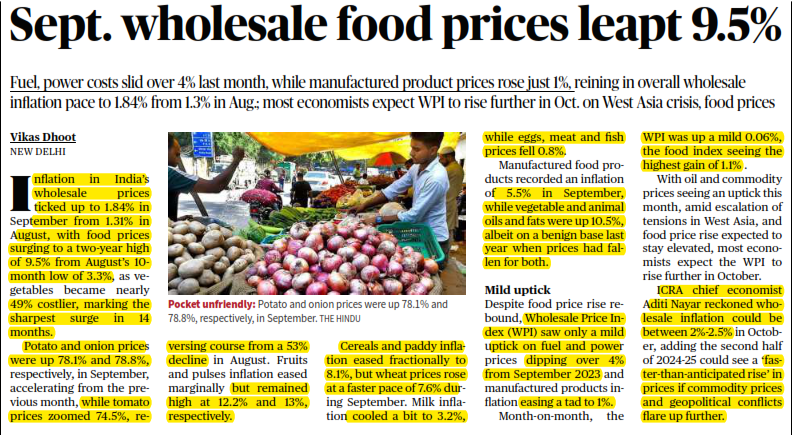
Sept. wholesale food prices leapt 9.5%
- Inflation in India’s wholesale prices ticked up to 1.84% in September from 1.31% in August, with food prices surging to a two-year high of 9.5% from August’s 10-month low of 3.3%, as vegetables became nearly 49% costlier, marking the sharpest surge in 14 months.
Highlights:
- India's Wholesale Price Index (WPI) inflation rose to 1.84% in September 2024, up from 1.31% in August, driven by a sharp increase in food prices. The surge in food inflation, particularly in vegetables, potatoes, and onions, is a major factor contributing to this rise, highlighting the vulnerability of the food sector to supply-side disruptions.
Food Price Inflation: A Sharp Uptick:
- The most significant contributor to rising inflation was the increase in food prices, which shot up to a two-year high of 9.5% in September, up from a 10-month low of 3.3% in August. The main drivers behind this surge include:
- Vegetables: A 49% increase, the sharpest in 14 months.
- Potatoes and Onions: Prices for both saw significant rises of 78.1% and 78.8%, respectively, further exacerbating the inflationary pressures.
- Tomatoes: Reversed course dramatically, with prices up 74.5%, following a 53% decline in August.
- Other food items also contributed to inflation, although to a lesser extent:
- Fruits: Inflation eased slightly but remained high at 12.2%.
- Pulses: Inflation remained elevated at 13%.
- Cereals and Paddy: Prices saw a minor easing, with inflation at 8.1%, while wheat prices rose faster at 7.6%.
- Meanwhile, milk prices showed a slight cooling with inflation at 3.2%, and prices for eggs, meat, and fish saw their second consecutive decline, falling 0.8% year-on-year.
Manufactured Food and Oil Price Dynamics:
- Inflation in manufactured food products was recorded at 5.5%, while vegetable and animal oils rose by 10.5%, influenced by the low base from the previous year. This sector's inflation is a reflection of both global price trends and domestic supply chain factors.
Stabilizing Factors: Fuel and Manufactured Goods:
- Despite the surge in food prices, the WPI saw only a mild uptick, thanks to a 4% decline in fuel and power prices from last September. Additionally, manufactured products inflation eased slightly to 1%, helping to moderate the overall inflation level.
- On a month-on-month basis, the WPI rose 0.06%, with food prices leading the increase at 1.1%, while prices for manufactured goods and primary articles increased by 0.14% and 0.41%, respectively. However, fuel and power prices fell 0.8% compared to August 2024, providing some relief.
Outlook for October and Beyond:
- Looking ahead, economists expect further increases in wholesale inflation due to multiple factors:
- Global Oil and Commodity Prices: Rising oil prices amid escalating tensions in West Asia are expected to contribute to higher costs for fuel and power.
- Food Prices: The surge in food prices is likely to remain elevated, further driving inflation.
- Geopolitical Tensions and Commodity Prices: The economic stimulus in China has pushed up prices for industrial metals, and ongoing geopolitical conflicts could disrupt global supply chains, further aggravating inflationary pressures.
- ICRA’s Chief Economist, Aditi Nayar, anticipates wholesale inflation to rise to 2%-2.5% in October, citing potential risks from global oil and commodity prices. Similarly, Rajani Sinha, Chief Economist at CareEdge Ratings, expects WPI inflation to average 2.5% from October to March 2025, driven by food price risks and energy price volatility.
Prelims Takeaways:
- ICRA
- Wholesale Price Index (WPI)