
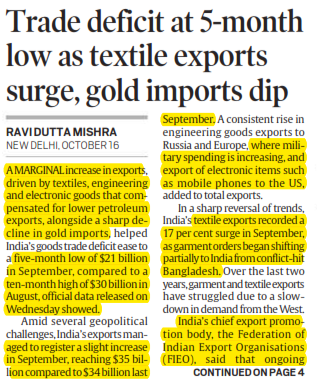
Trade deficit at 5-month low as textile exports surge, gold imports dip
- A MARGINAL increase in exports, driven by textiles, engineering and electronic goods that compensated for lower petroleum exports, alongside a sharp decline in gold imports, helped India’s goods trade deficit ease to a five-month low of $21 billion in September.
Highlights:
- India’s goods trade deficit eased to a five-month low of $21 billion in September 2024, following a marginal rise in exports and a sharp decline in gold imports. This is a significant improvement from August 2024, when the deficit hit a ten-month high of $30 billion. The data, released by the Ministry of Commerce, highlights several factors that contributed to this shift, including a surge in textile and engineering exports.
Key Drivers of Export Growth
Textiles and Engineering Exports:
- India’s textile exports saw a 17% surge in September, a notable recovery after struggling for two years due to weak demand from Western markets. This growth is attributed to a shift in garment orders to India from conflict-affected Bangladesh.
- Additionally, engineering goods, which account for nearly a quarter of India’s total exports, rose by 10% in September, driven by increased shipments to Russia and Europe, where military spending has been on the rise.
Electronic Exports:
- The export of electronic items, particularly mobile phones to the US, also saw a significant boost, contributing to the overall increase in exports. Electronic exports rose by 9%, reflecting India's growing role in global supply chains for high-tech goods.
Impact of Geopolitical Challenges
Middle East Conflict and Trade Disruptions:
- India’s export performance in September was impacted by geopolitical tensions, particularly in West Asia. Ashwani Kumar, President of the Federation of Indian Export Organisations (FIEO), highlighted that rising tensions between Israel and Iran have disrupted trade routes, as much of India’s trade with Europe, Africa, and the Gulf passes through the Red Sea and Gulf region.
- In response to the situation, Commerce Secretary Sunil Barthwal mentioned that the government is working with the shipping ministry to assess the West Asian crisis and is engaging in efforts to increase India’s shipping capacity to mitigate the negative impact.
Decline in Petroleum Exports and Gold Imports
Petroleum Exports:
- While there was an increase in textiles, engineering, and electronics, petroleum exports dropped by 26% in September, contributing to concerns about India’s export outlook. Global fuel demand has remained weak, despite the conflict in West Asia. Prices for refined petroleum products have continued to decline, partly due to Israel’s decision not to target Iran’s nuclear or oil sites, which has kept oil prices low.
Gold Imports:
- Gold imports saw a sharp 60% decline, falling from $10 billion in August to $4 billion in September, which helped reduce overall import levels to $55 billion. This decline in gold imports, which are often influenced by seasonal demand and festive preparations, contributed significantly to the narrowing of the trade deficit.
Trade Forecast and Future Concerns
Global Trade Outlook:
- The World Trade Organisation (WTO) has revised its forecast for global merchandise trade growth, reducing it to 3% for 2025, down from an earlier estimate of 3.3%. The ongoing conflict in West Asia, which has disrupted critical shipping routes like the Red Sea, is expected to further slow global trade. Rising energy prices and logistical challenges could adversely impact both global and regional trade flows, posing challenges for India’s export sector.
Challenges for MSMEs and Protectionist Policies:
- Trade finance remains a significant challenge for India’s MSMEs, which struggle to remain competitive in global markets due to volatility in crude and metal prices, according to FIEO. Furthermore, protectionist policies adopted by some countries have affected India’s metal exports, especially in the face of rising logistics costs and pricing issues in the global metal markets.
Prelims Takeaways:
- Federation of Indian Export Organisations (FIEO)
- World Trade Organisation (WTO)