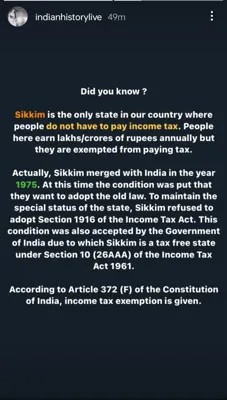
| State | Sikkim, a northeastern state in India, known for its landscapes, cultural heritage, and unique tax policies. |
| Tax Status | Sikkim enjoys a special tax exemption status, unlike other Indian states. |
| Historical Background | - Sikkim was an independent kingdom ruled by the Namgyal dynasty before integration. |
| - Became an Indian protectorate under the Indo-Sikkim Treaty of 1950. |
| - Merged with India in 1975 as the 22nd state under the 36th Amendment Act, 1975. |
| Legal Framework | - Article 371F of the Indian Constitution grants Sikkim special provisions, including tax exemptions. |
| - Sikkim Income Tax Manual of 1948 governed taxation before merger. |
| 2008 Tax Law Changes | - Section 10 (26AAA) introduced in the Income Tax Act, formalizing tax exemptions for Sikkimese individuals. |
| - Key provisions: Income tax exemption on earnings within Sikkim, dividends, and interest from securities. |
| - SEBI exemption: Sikkim residents exempt from PAN requirement for investments. |
| Supreme Court Verdict | - Initially, Section 10 (26AAA) excluded "old Indian settlers" and Sikkimese women married to non-Sikkimese men. |
| - Supreme Court ruled the exclusions unconstitutional, extending tax exemptions to all Sikkimese people. |
| Current Status | - Tax exemptions universally applied to all Sikkimese residents meeting criteria. |
| - Benefits include income tax exemption and investment benefits. |
| Socio-Economic Impact | - Tax-free status has contributed to economic development, tourism, and infrastructure. |