
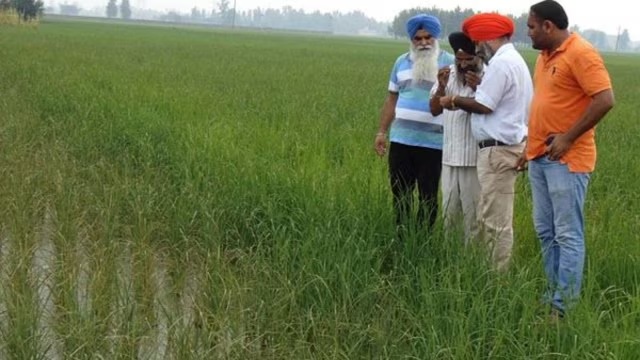
Why direct seeding of rice (DSR) is yet to pick up in Punjab
- The Punjab government has been actively promoting the direct seeding of rice (DSR), or ‘tar-wattar’ technique.
- This can reduce water use by 15% to 20%.
- Moreover, DSR requires less labor and matures 7 to 10 days faster, giving farmers more time to manage paddy straw.
- Despite these benefits, and government incentives this technique is yet to see widespread adoption in Punjab.
- Last year, only 1.73 lakh acres of the 79 lakh acres under paddy cultivation in Punjab saw the use of this technique.
- Even the government’s target of bringing 7 lakh acres under DSR this year represents less than 10% of Punjab’s total rice acreage.
Paddy Farming
- Traditionally, paddy farmers prepare nurseries where seeds are first sown.
- After 25-35 days, young seedlings are uprooted and replanted, in the main field.
- While this method is labor and water-intensive, it is known to maximize yields and maintain better crop health.
- The first round of irrigation is carried out 21 days after sowing, followed by 14-17 more rounds at 7-10 day intervals, depending on soil type and the quality of the monsoon.
- The final irrigation takes place 10 days before harvest.
- The traditional method requires 25-27 irrigations in total.
Soil texture is key
- Experts emphasise that soil suitability is crucial for the successful implementation of DSR. There are two factors here.
- First is the texture of the soil.
- It is more suitable for heavy or medium-to-heavy-textured soils.
- This is primarily because light-textured soils do not retain water well.
- Simply put, heavy-textured soils contain more clay and less sand, whereas light-textured soils have less clay and more sand. Also 80% of Punjab’s soil is light-textured.
Importance of iron content
- The iron content of the soil also determines the suitability of DSR. Soil with severe iron deficiency, and weed problems must not be cultivated using this technique.
- Lack of iron content can severely impact yields and lead to major financial losses for farmers. Sometimes, farmers might even have to transplant the crop anyway, after a month or so, leading to DSR losing its labour-saving benefits.
Path forward for DSR
- In this method, seeds are directly drilled into the fields, eliminating the need for nursery preparation and transplantation.
- A basic lack of awareness and understanding is holding DSR back.
- After using the method on unsuitable soil, farmers do not get the expected yields.
- They then develop apprehensions regarding DSR and revert to their traditional puddling method.
- Crucially, negative feedback spreads quickly by word of mouth, further dissuading other farmers for whom DSR might have been ideal.
- Extensive training and a ready helpline be provided, to handhold the farmers through the whole process, from pre-sowing to harvesting.
- Additionally, if farmers incur losses during the initial years of adoption, adequate compensation should also be provided, so as to not disincentive them from trying again.