
A new tryst with destiny
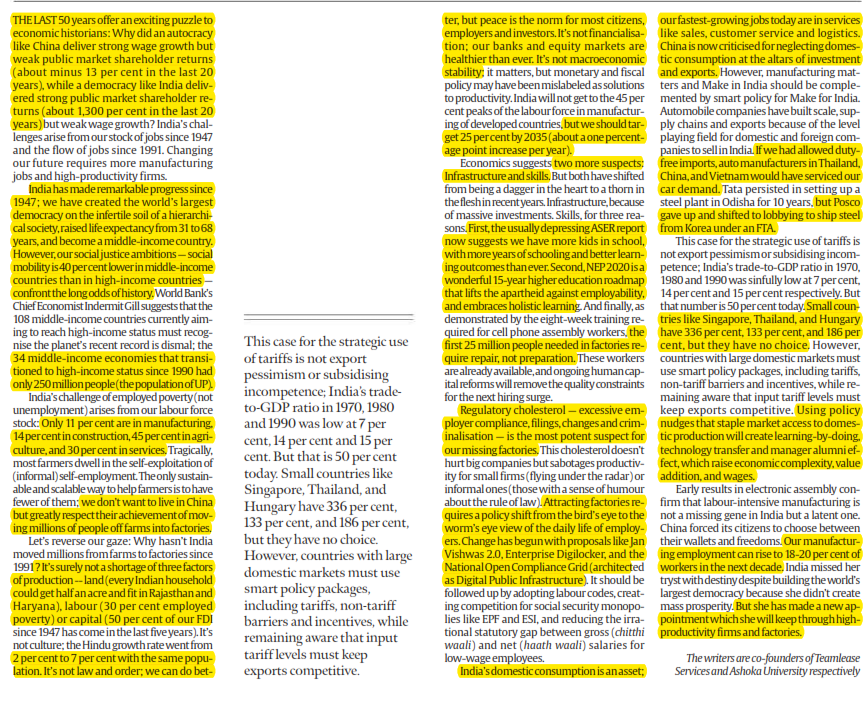
- The contrasting economic trajectories of China and India over the past 50 years present a fascinating puzzle for historians and economists alike. While China, an autocracy, has achieved significant wage growth without parallel returns for public market shareholders, India, a democracy, has seen impressive stock market gains but stagnant wage growth. This paradox highlights fundamental challenges and opportunities within each country's economic framework.
China vs. India: A Comparative Overview
Wage Growth vs. Shareholder Returns:
- China: Strong wage growth has occurred alongside a stagnating public market, reflecting a system that prioritizes worker compensation without necessarily enhancing shareholder value. This could be attributed to a focus on broad-based economic growth and labor rights within the state-controlled economy.
- India: In contrast, India's public markets have soared, with a 1,300% increase over the last 20 years, yet wage growth remains weak. This scenario indicates a disconnect between capital market success and real income growth for the workforce.
Historical Context and Economic Structure:
- Progress Since Independence: Since 1947, India has made significant strides, creating the world’s largest democracy, increasing life expectancy, and achieving middle-income status. However, challenges like low social mobility and a large informal workforce persist.
- Employment Composition: A considerable portion of India's workforce remains in low-productivity sectors:
- Agriculture: 45%
- Manufacturing: 11%
- Construction: 14%
- Services: 30% The challenge lies in transitioning workers from agriculture to more productive sectors like manufacturing.
The Path Forward for India:
- To address its economic challenges, India must focus on several strategic areas:
Enhancing Manufacturing Employment:
- India's manufacturing sector needs to grow to provide sustainable employment. Aiming for 25% of the workforce in manufacturing by 2035 could significantly elevate productivity and wages.
Regulatory Reform:
- Excessive regulation has stifled growth, particularly for small and informal firms. Streamlining compliance processes and adopting new labor codes can encourage entrepreneurship and factory establishment.
Infrastructure and Skill Development:
- While infrastructure investments have improved, skills development remains critical. The National Education Policy (NEP) 2020 aims to enhance employability, aligning educational outcomes with market demands.
Domestic Consumption and Policy Support:
- India's growing domestic consumption should be leveraged alongside Make in India initiatives. Strategic tariffs and smart policies can foster a competitive manufacturing environment, ensuring that domestic production meets local demand.
Strategic Use of Trade Policies:
- Utilizing tariffs and non-tariff barriers strategically can protect and stimulate domestic industries. India’s trade-to-GDP ratio has improved, indicating a potential for enhanced global competitiveness if balanced with local needs.
Conclusion: A New Economic Destiny:
- India's challenge lies in transforming its economic structure to elevate mass prosperity. By focusing on high-productivity firms, reducing the informal sector's dominance, and creating conducive environments for manufacturing growth, India can realize its potential.
- The path to economic success may require navigating complex regulatory landscapes and fostering a skilled workforce, but the foundational elements are present. With strategic efforts, India can position itself not just as a democratic success story but as an economic powerhouse capable of sustaining high living standards for its population.