
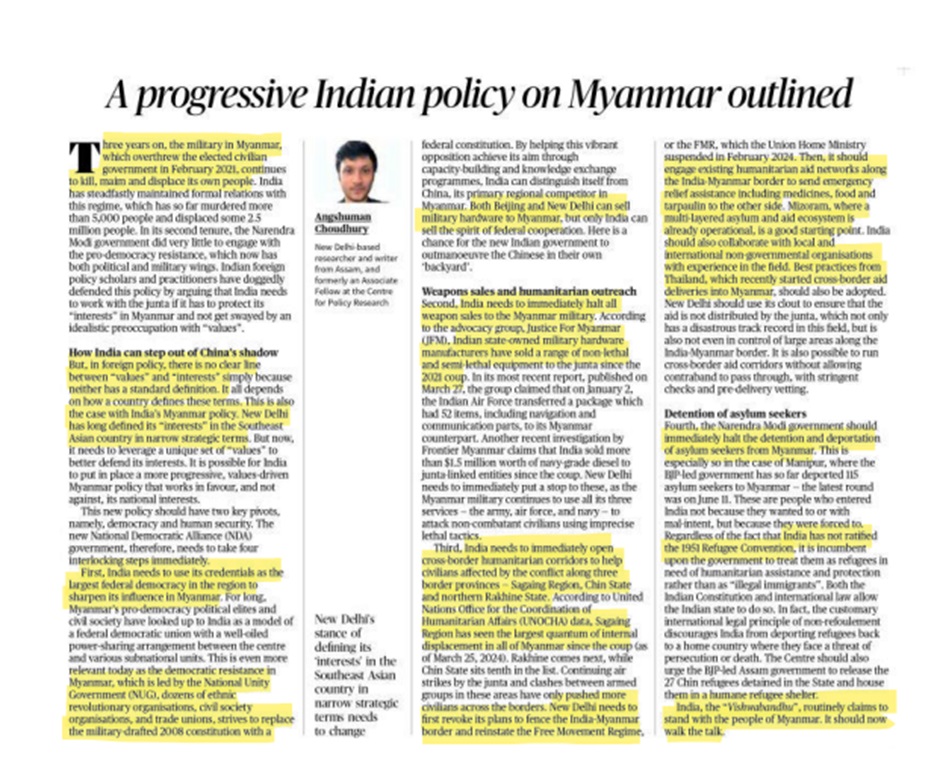
A progressive Indian policy on Myanmar outlined
- Three years on, the military in Myanmar, which overthrew the elected civilian government in February 2021, continues to kill, maim and displace its own people.
- India has steadfastly maintained formal relations with this regime, which has so far murdered more than 5,000 people and displaced some 2.5 million people.
KEY HIGHLIGHTS
- India, as a major democracy, should leverage its position to promote democracy and human rights in Myanmar.
- This approach, they argue, aligns better with India's long-term goals and strengthens its regional standing.
Recommendations for Change:
- Supporting Democracy: India can utilize its democratic experience to assist Myanmar's pro-democracy movement.
- This could involve offering training and knowledge sharing to the National Unity Government and other resistance groups.
- Ending Military Support: India should immediately stop selling weapons and providing any military aid to the junta, as these resources are used to suppress civilians.
- Humanitarian Aid: India can establish humanitarian corridors across the border to deliver aid to conflict-affected civilians in Myanmar. This might involve reviving the Free Movement Regime (FMR) and working with local and international NGOs.
- Protecting Refugees: India needs to stop detaining and deporting refugees fleeing Myanmar. International law and humanitarian principles dictate that they be treated as refugees seeking protection, not illegal immigrants.
- Promoting Inclusive Refugee Policies: The government should ensure humane treatment and shelter for refugees, drawing from best practices used in other countries and adhering to international standards.
- By adopting a more values-driven approach, India can better balance its strategic interests with its commitment to democracy and human rights.
PRELIMS TAKEAWAY
- Map based questions