
Kerala researchers develop breakthrough cyanide sensor to enhance safety of water, food products
- A research team at the Central University of Kerala has developed a highly sensitive and selective cyanide sensor.
Highlights:
- The team has created a material capable of detecting toxic cyanide at low concentrations, promising to enhance the safety of drinking water and food products.
- Cyanide, a potent toxin, is present in various plants, fruits, and microorganisms.
- The World Health Organisation (WHO) has set strict guidelines for its presence in potable water, limiting cyanide concentrations to below 0.19 mg/L due to its lethal effects on humans and aquatic life.
- Cyanide exposure can occur through consumption of certain foods like cassava (tapioca) and even common items like apple and apricot seeds, sprouting potatoes, and almonds.
- The risk is particularly severe in regions where cyanide-rich foods are staples.
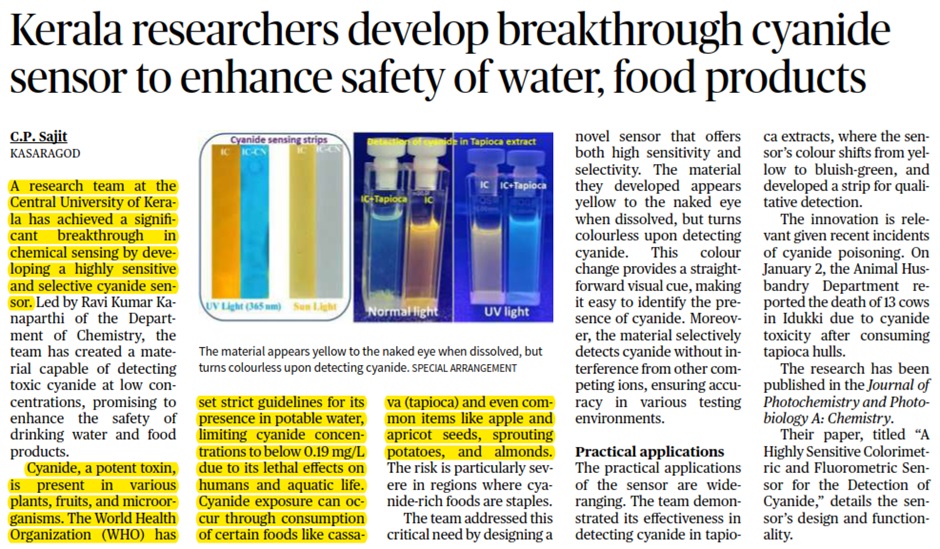
- The material they developed appears yellow to the naked eye when dissolved, but turns colourless upon detecting cyanide.
- The team demonstrated its effectiveness in detecting cyanide in tapioca extracts, where the sensor’s colour shifts from yellow to bluish-green, and developed a strip for qualitative detection.
- This strip changes colour upon cyanide exposure, providing a simple and efficient tool for field testing.
- The innovation is especially relevant given recent incidents of cyanide poisoning.
- Cyanogenic glycosides in foods like tapioca, while not inherently toxic, could release hydrogen cyanide upon contact with enzymes in saliva, leading to fatal outcomes.
- This underscores the critical role that the sensor could play in preventing cyanide-related deaths and ensuring public safety.
- The development of the sensor marks a significant advancement in chemical detection technology, with potential applications not only in Kerala but globally.
- It represents a promising tool for safeguarding human health against cyanide poisoning, whether in drinking water, food products, or industrial settings.
Prelims Takeaway
- Cyanide
- Tapioca