
POWER THAT HASN'T PEAKED
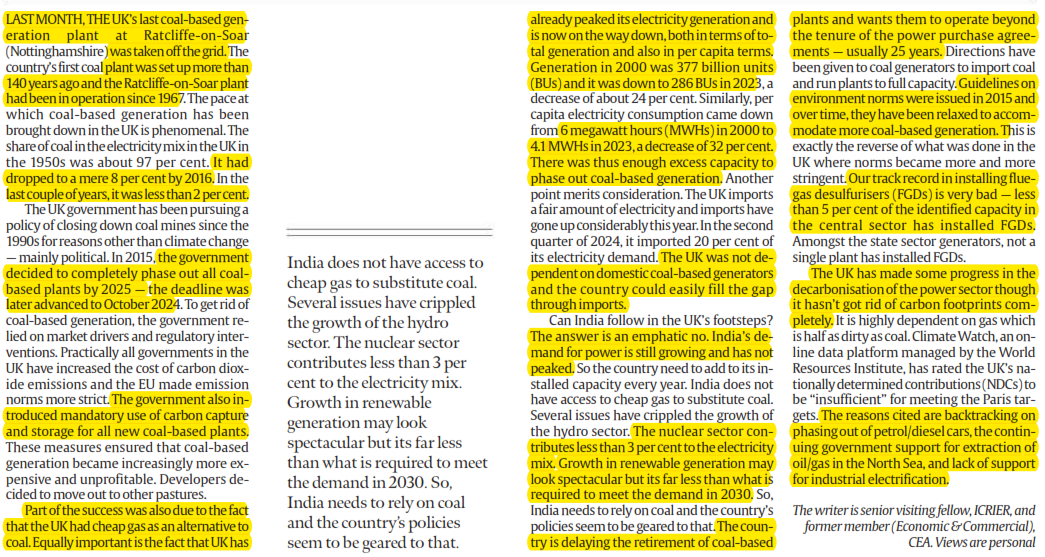
- The UK marked a significant milestone last month with the decommissioning of the Ratcliffe-on-Soar plant, the last coal-based generation facility in the country. This plant, operational since 1967, was part of a long-standing reliance on coal, which constituted about 97% of the UK’s electricity mix in the 1950s.
- However, by 2016, coal's share had plummeted to around 8%, and in recent years, it has dipped below 2%. The UK government’s commitment to phasing out coal was formalized in 2015, with an ambitious target to close all coal plants by 2024, driven primarily by market dynamics and regulatory changes.
Drivers of Coal Phase-Out:
- Several factors contributed to the rapid decline of coal in the UK:
- Regulatory Framework: The government implemented stringent carbon pricing and emission norms, effectively raising the cost of coal-based power generation. Mandatory carbon capture and storage for new plants further diminished coal's profitability.
- Abundant Alternatives: The UK capitalized on an abundance of cheap natural gas, which served as a cleaner alternative to coal. This transition was made easier due to the country’s peak electricity generation already being reached, allowing for a gradual reduction in overall generation capacity.
- Decreasing Demand: Electricity generation decreased from 377 billion units in 2000 to 286 billion units in 2023, reflecting a 24% reduction. Per capita consumption also fell by 32%, providing an excess capacity that facilitated the coal phase-out without immediate repercussions on supply.
- Electricity Imports: The UK has increasingly relied on imported electricity to fill any gaps in domestic generation, with imports accounting for 20% of its electricity demand in the second quarter of 2024.
Challenges for India
- In contrast to the UK’s successful transition, India faces significant hurdles in reducing its reliance on coal:
- Growing Demand: India’s electricity demand is still on the rise, necessitating annual additions to installed capacity. Unlike the UK, India has not reached a peak in electricity generation, making the need for coal more pressing.
- Lack of Affordable Alternatives: The absence of cheap natural gas limits India’s options for replacing coal. The hydroelectric sector faces numerous challenges, and nuclear energy contributes minimally (less than 3% of the electricity mix).
- Renewable Energy Limitations: While growth in renewable energy generation is evident, it remains insufficient to meet future demands. India’s renewable targets require significant acceleration to achieve desired outcomes by 2030.
- Policy Directions Favoring Coal: Current policies indicate a preference for maintaining coal-based generation, delaying the retirement of aging plants, and even extending their operational life beyond typical agreements. Additionally, guidelines for environmental norms have been relaxed to allow for more coal usage, contrasting sharply with the UK’s stricter measures.
- Installation Deficiencies: The lack of installed flue-gas desulfurisers (FGDs) further complicates the situation, with less than 5% of the identified capacity in central sector plants having installed these crucial emissions-reducing technologies.
UK’s Decarbonization Progress:
- Despite the UK’s strides in reducing coal usage, it still grapples with carbon emissions and remains dependent on gas, which is a cleaner but still fossil fuel source. Critically, the UK’s Nationally Determined Contributions (NDCs) have been rated as “insufficient” in achieving the targets set by the Paris Agreement, primarily due to:
- Backtracking on vehicle emissions: Delays in phasing out petrol and diesel cars.
- Continued support for fossil fuel extraction: Ongoing government backing for oil and gas extraction in the North Sea.
- Insufficient support for industrial electrification: Lack of initiatives to promote a comprehensive transition away from fossil fuels in various sectors.
Conclusion
- While the UK showcases a successful case of transitioning away from coal through a combination of policy, market dynamics, and alternatives, India’s path diverges significantly. With a growing demand for electricity and a continued reliance on coal, India must navigate its unique challenges while striving to meet its renewable energy targets.