
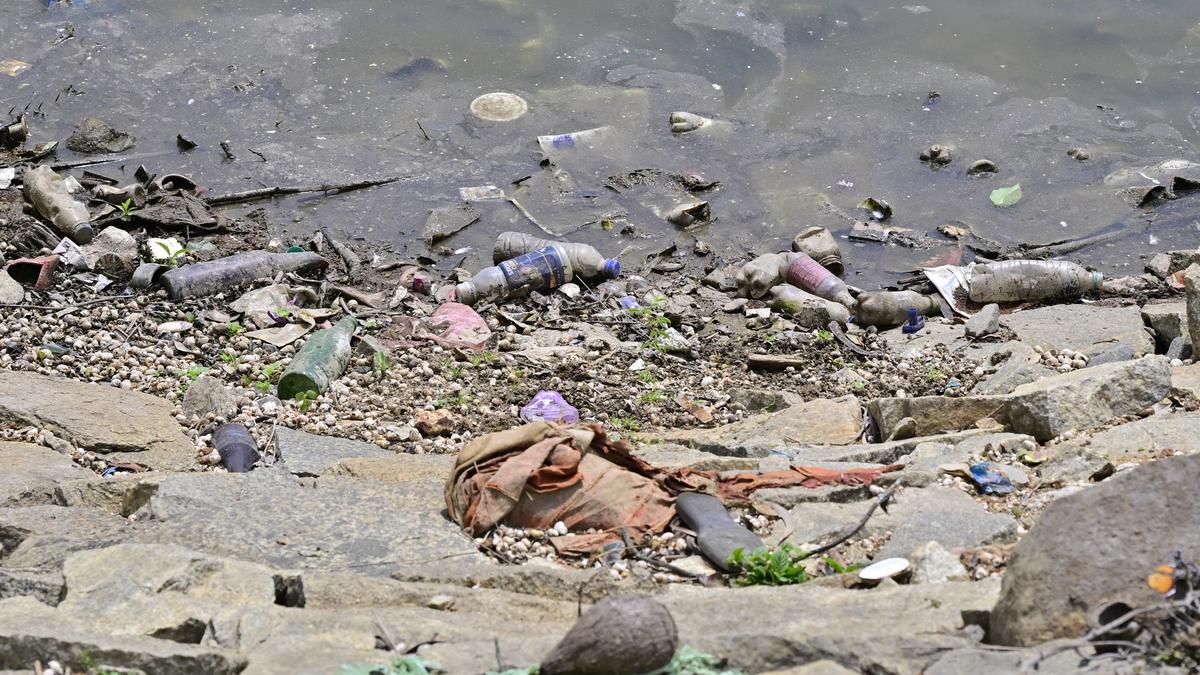
What is SWM cess and why is it levied on waste generators?
- The Bengaluru Urban Body has proposed a Solid Waste Management (SWM) Cess of ₹100 per month for each household.
- It is important to understand the rationale behind SWM cess, its intended use, and the broader context of solid waste management challenges faced by Urban Local Bodies (ULBs) in India.
Key highlights
- Urban Local Bodies (ULBs) levy user fees or SWM cess as per the provisions of Solid Waste Management Rules, 2016.
- ULBs are now considering revising these rates and imposing higher charges on bulk waste generators to meet a portion of the costs incurred in providing SWM services.
What are the costs?
- ULBs typically deploy about 80% of their manpower and up to 50% of their annual budgets to provide SWM services to city residents.
- Bangalore generates about 5,000 tonnes of solid waste per day.
- Managing this volume of waste requires around 5,000 door-to-door waste collection vehicles, 600 compactors, and about 20,000 Sanitation Workers
- SWM services comprise four components: collection, transportation, processing and disposal.
- Collection and transportation are resource and labor-intensive and come up to 85-90% of the SWM budget, whereas only about 10-15% is spent on processing and disposal of waste.
What are the challenges?
- Solid waste generated in Indian cities consists of about 55-60% wet biodegradable material and 40-45% non-biodegradable material.
- Although 55% of the wet waste can be converted into organic compost or biogas, the yield is as low as 10-12%, making both composting and biogas generation from solid waste financially unviable.
- Apart from financial challenges, ULBs face other challenges associated with SWM services, such as extra work of clearing drains, preventing open littering, seasonal changes in waste generation, and sweeping operations.
- Disposal of non-compostable and non-recyclable dry waste, such as single-use plastic, textile waste and inert materials, is expensive since the material needs to be shipped to cement factories or waste-to-energy projects located about 400-500 km from cities.
What is the solution?
- Although collection and transportation of waste generate no revenue, several strategies can reduce overall expenditure on SWM and lower user charges.
- These are segregation of waste at source,
- reducing single-use plastic, decentralised composting initiatives,
- Information, Education and Awareness (IEC) to prevent open littering, and
- asking bulk waste generators to process their own waste.
- A balanced approach, combining marginal user charges with efficient operations, could help make our cities cleaner.